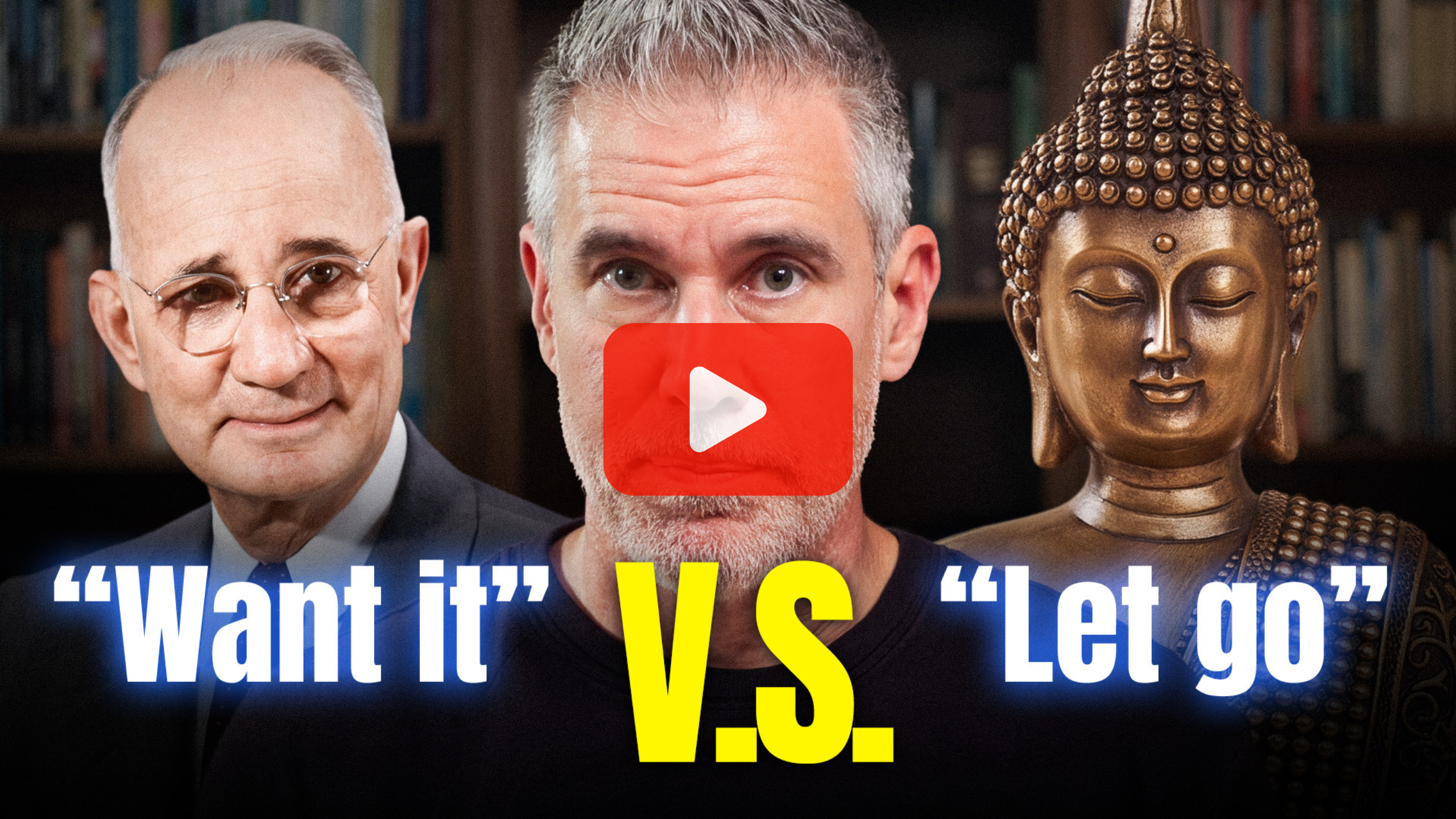
Episode 278 – Non-Attachment vs. Burning Desire, Finally Explained
Subscribe on: APPLE PODCASTS | SPOTIFY | YOUTUBE | GOOGLE | RSS
Note: This blog post serves as an accompaniment to the corresponding podcast episode of A Changed Mind, where we’ll distill down the core ideas of this week’s theme, along with additional distinctions and insights. If you haven’t listened to the episode yet, you can go here to do so. Enjoy.
Take the free Limiting Beliefs Discovery Assessment – a 5-minute experience that reveals the exact beliefs holding back your income, health, relationships, and personal growth — and gives you the proven tool to transform them  https://www.wholehuman.com/decision
In this episode of A Changed Mind, David Bayer resolves the paradox at the center of personal growth: how to want something with everything you have without handing it the power to destroy your peace.
Napoleon Hill said the starting point of all achievement is a burning desire. The Buddha taught non attachment. Neville Goddard said to live as though it is already done. David argues all three are right, and breaks the law of detachment into three pieces: desire, detachment, and certainty.
He starts by defending desire, because most people get this part wrong. Detachment does not mean wanting nothing, and David is direct about the pseudo-spirituality of calling indifference awakening. The problem is what happens next, when desire quietly becomes need. I want this becomes I need this, then I need it soon, then if this does not happen I am a failure. There is a simple way to know you crossed the line: your emotional state starts depending on the outcome. Without realizing it, you handed the outside world authority over how you feel.
Detachment, then, is not I do not care what happens. It is my wellbeing is not dependent on what happens. David makes the case that this is a nervous system practice rather than a spiritual concept, because anyone can have faith when the evidence supports it. The practice begins when reality contradicts you. And the insight underneath it is sharp: you do not suffer because reality contradicted your desire, you suffer because you decided the contradiction means something. He brings in the parable of the wise farmer and the ignorant neighbor, and audits his own mind out loud on how rarely its worst predictions came true.
Certainty is where Neville closes the loop. Hill gives you direction, Buddha gives you the freedom to allow, Neville gives you the identity to hold. And certainty does not mean knowing how it will happen. It means trusting that whatever is happening is for your good regardless of how it ends. Attachment says it has to be this door. Certainty says I know where I am going and I am willing to discover doors. He closes with a three question practice for the next time you get triggered, and a far more usable definition of unshakable: not a state where nothing bothers you, but a shorter distance between the moment you get knocked out of yourself and the moment you return.
Watch This Episode On YouTube