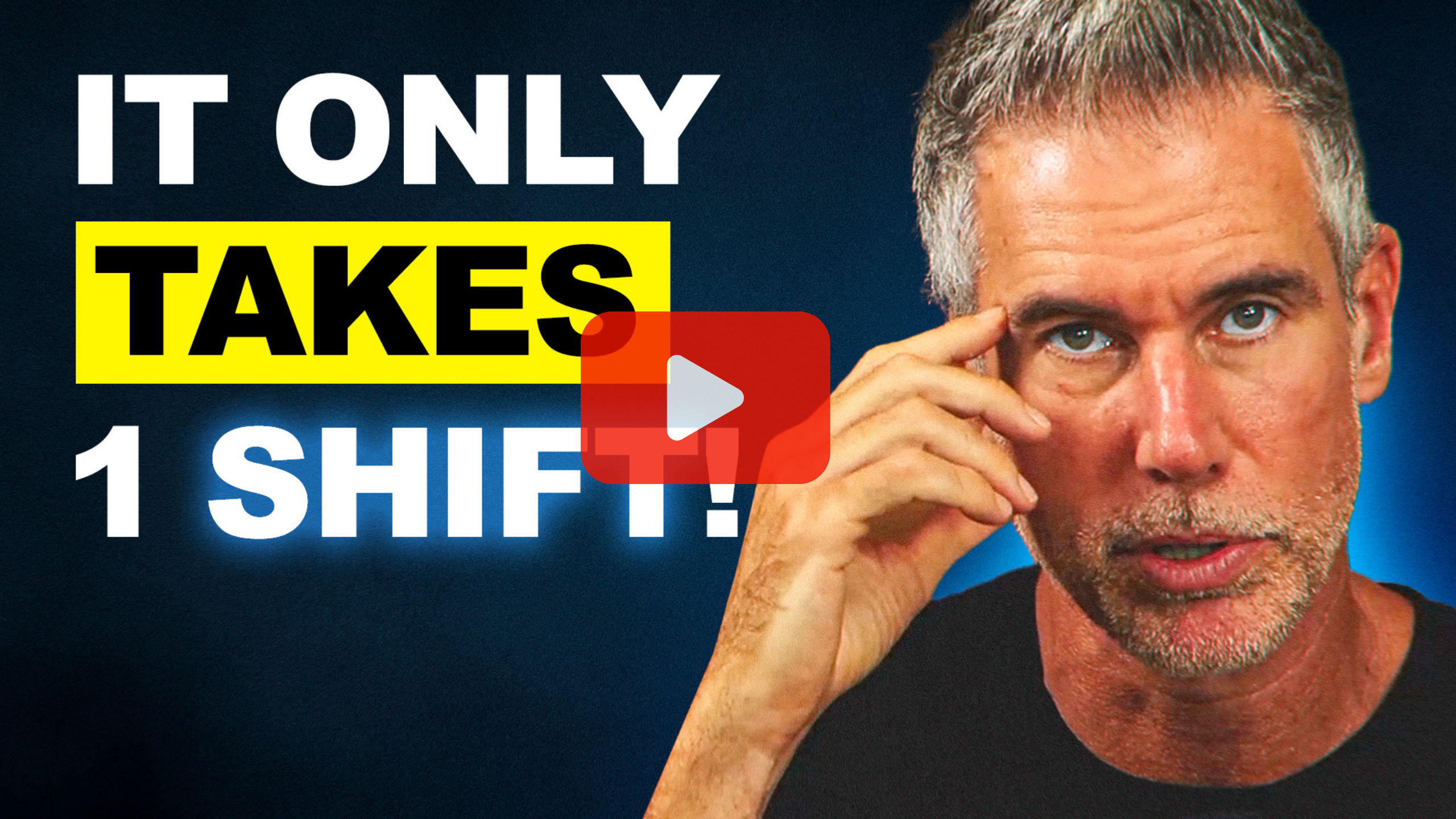
Episode 163 – Rewire Your Brain for Superhuman Discipline
Subscribe on: APPLE PODCASTS | SPOTIFY | YOUTUBE | GOOGLE | RSS
Note: This blog post serves as an accompaniment to the corresponding podcast episode of A Changed Mind, where we’ll distill down the core ideas of this week’s theme, along with additional distinctions and insights. If you haven’t listened to the episode yet, you can go here to do so. Enjoy.
We beat ourselves up for not being disciplined. We make promises to ourselves that we continue to break, and then the discipline industry tells us to time block, hustle more, wake up at 5:00 AM, and follow a perfect morning routine. But here’s the truth: none of those are the real reasons you lack discipline. Today, I want to show you what’s actually preventing you from having the discipline and consistency you want. And when you understand these two distinctions, you’ll become disciplined beyond your wildest imagination—no matter how long you’ve struggled to follow through.
You Are Already Disciplined—Just at the Wrong Things
If you’ve ever told yourself, “I just wish I was more disciplined,” I want you to see something important: you are already disciplined. The problem is, you’re disciplined at the wrong things. You might be disciplined at scrolling social media for hours, disciplined at poor sleep habits, disciplined at worry, or disciplined at procrastination. Discipline is simply repeated behavior. You’ve built consistency—you’ve just built it around things that don’t serve you. The shift is not about creating discipline from scratch, but about redirecting it.
Think about it: if you can spend 90 minutes lost in a Netflix show, you’ve demonstrated the ability to focus consistently. If you can rehearse anxious thoughts every night before bed, you’ve proven your ability to repeat patterns with precision. The skill of discipline is already inside you. What’s missing is the clarity to redirect it toward actions that align with the life you actually want. That realization alone is liberating because it means you’re not broken—you’ve just been practicing the wrong thing.
The bigger problem is what comes after: self-judgment. We don’t just fail to wake up early or hit the gym—we label ourselves as lazy, weak, or broken. That judgment creates shame, and shame makes it even harder to change. The cycle repeats, and every failed attempt at discipline feels like more proof that something is wrong with us. The truth is, nothing is wrong with you. You’re simply operating from the wrong context.
I’ve been there myself. For years, I thought I had a discipline problem. I looked at people who woke up at 4:30 in the morning, hit the gym, and crushed their workday, and I thought, “Why can’t I be like them?” But then I realized, I was like them—I just had different habits. I was disciplined at hitting snooze. Disciplined at numbing out when things felt hard. Disciplined at rehearsing fear. It was humbling to see, but it was also empowering. Because if I was already disciplined at those things, I could just as easily become disciplined at something else.
Why Tools Alone Don’t Work
This is where the discipline market steps in to sell us tools. Time blocking, hustle culture, cold plunges, meditation routines. Now, these tools aren’t bad—I enjoy many of them. But they’re not the root solution. They’re the byproducts of discipline, not the cause. That’s why most people can keep them up for three or four days before quitting. They start with tools, fail, and then reinforce the story: “See? I suck.”
Tools are like crutches when what you really need is healing. They help you walk a little better for a while, but they don’t address the broken bone. Until you deal with the underlying clarity about who you are and why you’re doing what you’re doing, no tool will stick. That’s why one person thrives with a planner and another abandons it after a week—it’s not the tool, it’s the context behind it.
True discipline is not about white-knuckling it through willpower. It’s about two core distinctions: context and readiness.
Distinction One: Discipline is a Byproduct of Context
I had a client who ran a successful autobody shop while building a coaching business for other shop owners. He knew he should be marketing his trainings but found himself procrastinating. He told me, “What’s wrong with me? Why can’t I just do it?” My answer: you’re not seeing the context. He thought he was just running another training. But the truth was, he was building his vision—his future as a leader and coach who could impact thousands of lives.
Context transforms mundane tasks into meaningful ones. I don’t wake up excited to review emails, manage my team, or pitch myself for podcasts. But when I remember the context—that I’m working to build a transformational empire that ends human suffering—those tasks become part of my vision. They’re not chores, they’re steps on the path.
Arnold Schwarzenegger said it best: “When you have a goal, everything becomes easier.” Every rep, every set, every exercise was exciting for him, because each one brought him closer to his Mr. Universe title. The reps didn’t change—the context did.
So when you find yourself avoiding the things you “should” be doing, the real question is: What game are you playing? What vision are you serving? Without context, discipline feels like sacrifice. With context, it feels like joy. Once you link even the most boring action to the bigger vision of who you are becoming, discipline stops being something you fight for and starts being something you can’t wait to do.
And this isn’t just theory. I remember the early days of building my business, when the work often felt tedious. Cold calls, spreadsheets, late nights learning skills I had no natural interest in. If I had looked at those tasks in isolation, I never would have stuck with them. But when I connected them to the larger context—my desire to build freedom for my family, to make an impact in the world—they became meaningful. They weren’t chores anymore. They were stepping stones.
Distinction Two: Readiness is Not Your Job
The second reason people lack discipline is because they disqualify themselves. “I’m not ready yet.” I hear this all the time—from clients, from friends, from my own inner voice. But here’s the truth: readiness isn’t yours to decide. Life decides. God, the universe, higher intelligence—whatever you call it—determines when you’re ready. If the opportunity shows up, that’s proof you are.
I’ve lived this firsthand. My first talks were in tiny rooms with a dozen people. Then one day, sitting on a plane, a stranger overheard me explaining my work and invited me to speak on stage to a thousand financial advisors. I didn’t feel ready. I was terrified. But readiness wasn’t my decision to make. I said yes, and it changed everything.
The same thing happened when I was invited to Impact Theory, a podcast that had hosted giants like Joe Dispenza and Tony Robbins. Did I feel ready? Not even close. But the opportunity arrived, which meant life knew I was. Readiness is revealed by what shows up—not by how you feel.
And here’s the irony: if you wait until you feel ready, you’ll never move. Because the feeling of readiness doesn’t come first—it comes after. It’s the byproduct of taking action in spite of fear. The truth is, fear is often the clearest sign you’re exactly where you’re supposed to be. Life wouldn’t put the opportunity in front of you if you weren’t equipped to handle it, even if you can’t see that yet.
When you live this way, discipline becomes inevitable. You stop waiting for some perfect moment to begin and start saying yes to what’s in front of you. And with every yes, your capacity expands. You learn to trust that the fear of not being ready is just another form of resistance. The only way through is action.
Identity: This Is Who I Am, So This Is What I Do
My friend Cody Jefferson says it perfectly: “This is who I am, so this is what I do.” Discipline isn’t about forcing yourself to wake up early, eat clean, or work hard. It’s about deciding who you are, and then living in alignment with that decision. I chose the identity of a sober man, so I live as a sober man. I chose the identity of a successful entrepreneur long before anyone else saw me that way, so I acted accordingly.
Identity creates discipline. When your actions are connected to who you’ve decided to be, consistency becomes natural. It doesn’t mean you never fail—I’ve failed plenty. But instead of beating myself up, I recommit. I fall, I get back up, I keep going. That’s the difference between people who win and people who stay stuck.
And here’s the deeper truth: identity is always available. You don’t need proof to claim it. You don’t need external validation. You can wake up tomorrow and declare, “This is who I am now,” and begin living from that place. The world will catch up. The results will follow. But the choice must come first.
For me, deciding to take on the identity of a leader was terrifying. I didn’t feel like one. I didn’t have the accolades or the track record. But when I claimed it, when I began living as if it were true, everything around me shifted. People started responding differently. Opportunities aligned. My inner world caught up to the declaration. That’s the secret—identity leads, and discipline follows.
The Real Secret of Discipline
So here’s the truth: you don’t have a discipline problem. You don’t have a motivation problem. You have a clarity problem. You lack context, and you misunderstand readiness. Fix those two things, and discipline becomes effortless.
Your job is not to be perfect. Your job is to be clear on your vision, to align your daily actions with that vision, and to say yes to opportunities when they arrive—whether or not you feel ready. When you do, discipline stops being a grind and becomes a natural expression of who you are becoming.
Discipline isn’t about punishment or perfection. It’s about alignment and identity. It’s about remembering why you’re doing what you’re doing and trusting that life has already qualified you to do it. Once you get that, you’ll realize you’ve been disciplined all along—you just need to redirect it to the things that matter most.
So the next time you catch yourself saying, “I wish I had more discipline,” pause and reframe. Ask yourself, “Where am I already disciplined, and how can I redirect that energy?” Then ask, “What’s the context behind what I’m avoiding?” Finally, remind yourself: “If the opportunity is here, then I am ready.” Live from those truths, and you won’t just become disciplined—you’ll become unstoppable.
Watch This Episode On YouTube