Episode 157 – I Reprogrammed My Brain in 24 Hours
Subscribe on: APPLE PODCASTS | SPOTIFY | YOUTUBE | GOOGLE | RSS
Note: This blog post serves as an accompaniment to the corresponding podcast episode of A Changed Mind, where we’ll distill down the core ideas of this week’s theme, along with additional distinctions and insights. If you haven’t listened to the episode yet, you can go here to do so. Enjoy.
What if I told you that everything you’ve been taught about aging, fatigue, and declining health is a lie? That there is a treatment so powerful it took me from functioning at barely 50% capacity to feeling like I was operating at 130%—and it happened after just one session. Yet your doctor will never tell you about it, because it isn’t available in the United States. This isn’t science fiction. This is the future of human optimization, and I want to share exactly how I accessed it.
I just returned from Colombia, where I underwent a specific stem cell treatment that has already reversed my brain fog, started regrowing my hair, eased my chronic pain, and, most importantly, renewed my belief that health doesn’t have to decline with age. This experience marked a turning point in my journey after nearly a decade of mysterious health struggles that no doctor seemed able to solve.
Eight Years of Struggle
For almost eight years, I battled a collection of symptoms that left me exhausted, frustrated, and hopeless. I looked healthy on the outside, but inside, I was falling apart. The brain fog was relentless—it made me feel like I was living in a two-dimensional reality. Simple tasks like going to Costco became overwhelming because I couldn’t cognitively process the environment around me. I battled anxiety daily, even though I had spent years doing deep work on my mindset and spirituality. Nights brought insomnia, leaving me exhausted but somehow still wired. My body ached with neuropathy and nerve irritation. I experienced skipped heartbeats and palpitations that made me question whether something more serious was wrong.
The worst part was the merry-go-round of medical opinions. Each doctor had their own theory: mold, metals, parasites, nutrition, viruses. I was seeing some of the best experts in the world and had cabinets full of supplements, yet nothing worked. Eventually, I resigned myself to believing that this was simply how life would be—that I would just have to grind through each day with no end in sight. And the thought terrified me, especially as a father with a three-year-old and a mission that requires energy, clarity, and resilience.
What made it even harder was the constant feeling of being misunderstood. Friends would see me working, traveling, or speaking on stage and assume I was fine. But they didn’t see the nights I lay awake, mind racing, body buzzing, wishing desperately for rest. They didn’t see the frustration of being told by another doctor that all my tests looked normal when I knew something was profoundly wrong. That invisible struggle almost broke me, until I finally decided I couldn’t accept “this is just how it is” as my reality.
A Radical Step: Partnering with AI for My Health
At one point, I decided I couldn’t just accept my situation any longer. Out of desperation, I turned to ChatGPT. I shared my symptoms, ran the tests it suggested, and uploaded my results back into the platform. For the first time, I saw a clear picture. It wasn’t one big problem—it was many small imbalances stacking up: mitochondrial dysfunction, gut issues, neurotransmitter problems, toxins, hormonal imbalances. What emerged was the profile of a high performer in burnout.
ChatGPT laid out a recovery plan: six months, twelve months, eighteen months, and even a 20-year vision for longevity. Central to that plan was something that kept standing out—stem cells. The more I researched, the more I realized this could be the breakthrough I needed.
That process was humbling. I had always prided myself on being proactive, on finding the best doctors and the most cutting-edge treatments. But it was AI, not a human physician, that finally connected the dots. It gave me a roadmap that felt coherent instead of chaotic. Seeing a plan that spanned not just the next few months, but the next two decades, gave me hope again. It reminded me that I wasn’t broken—I was simply running outdated programming that needed to be reset.
Stem Cells Explained
Here’s what most people don’t know: in the U.S., stem cell treatments are limited. Doctors can extract your own stem cells and re-inject them, which can help. But if you’re 50 years old, you’re putting 50-year-old cells back into your body. Internationally, however, clinics are using mesenchymal or Wharton’s Jelly stem cells—day-zero stem cells sourced from umbilical cord blood. These are brand-new cells with incredible regenerative potential.
Until 2019, these treatments were available in the U.S., but the FDA banned them, citing lack of clinical efficacy. Yet thousands of people are traveling to places like Colombia, Panama, and Costa Rica to access them. Why? Because the results speak for themselves.
To understand why these treatments are so powerful, you have to understand what stem cells actually do. They are undifferentiated, meaning they can become whatever type of cell your body needs most. If your brain is struggling, they become neurons. If your gut is inflamed, they become intestinal lining. They don’t just mask symptoms—they repair the root cause at the cellular level. That’s what makes them so radically different from pharmaceuticals, which often only address surface-level symptoms without tackling the underlying dysfunction.
My Experience in Colombia
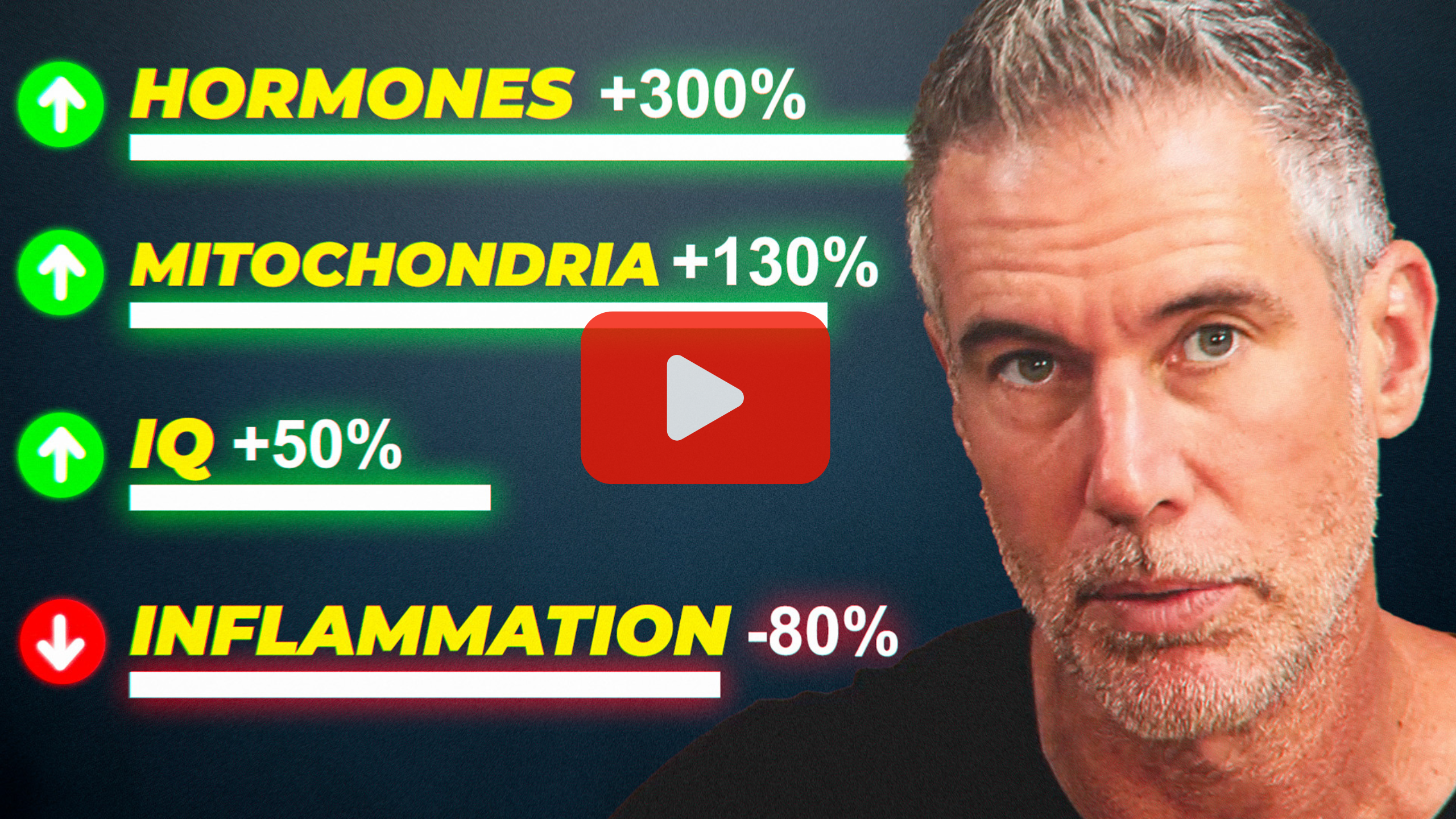
I chose to go to BioXcellerator in Medellín, Colombia. This clinic is where UFC fighters, athletes, and high performers go to recover and optimize. I went in operating at 50–60% across many invisible systems in my body—mitochondrial function, neurotransmitters, hormones. These don’t show up on your standard blood work, so most doctors never detect them. ChatGPT predicted that with one round of IV stem cells, I could jump to 90–130% functionality. That wasn’t just recovery—it was optimization.
At BioXcellerator, I witnessed miracles. I met three spinal cord injury patients who had been told they would never walk again. After their second treatment, they were walking. The clinic itself was more advanced than anything I’ve seen in the U.S.—with hyperbaric chambers, ozone therapy, cryotherapy, and personalized care that made my previous medical experiences look archaic.
I received systemic IV stem cells as well as targeted injections in my shoulder, which I had injured twice. Years earlier, I had avoided surgery thanks to stem cells, but lingering pain remained. Within six weeks of this new treatment, that pain was reduced by 70%, and my range of motion was dramatically improved.
What stood out most was not just the cutting-edge technology, but the philosophy of care. Every step of the process was designed to support healing—nutrient IVs, relaxation protocols, detailed consultations that actually made me feel heard. For the first time in years, I didn’t feel like a case file; I felt like a whole human being. That environment of respect and possibility was as healing as the treatment itself.
The Science of Repair
Stem cells work in phases. The first three weeks bring an inflammatory response—your body feels worse before it feels better. I had body aches, more brain fog, even flu-like symptoms. But this is how the body directs healing to the right places. Weeks four through ten enter the remodeling phase. The cells adapt to become the exact types needed—gut, brain, nerve, or cartilage cells—repairing from the inside out. From weeks ten to twenty-six, the rebuilding phase begins. This is where the most profound results show up.
Already, in just six weeks, my sleep is restored, my brain fog is 90% gone, my body aches have disappeared, and my energy feels limitless compared to before. Even unexpected benefits have appeared: hair regrowth where it had been thinning, and pigment returning where it had turned white. My wife’s hip pain, which had persisted for five years, vanished completely after her treatment.
The timeline itself is encouraging because it shows that healing doesn’t have to be instant to be real. We live in a culture addicted to quick fixes, but stem cells are about deep, lasting transformation. They rebuild the architecture of your body. Each phase has its own challenges and gifts. When you understand the process, you stop fearing the temporary discomfort and start trusting the trajectory.
A New Story of Aging
The psychological impact of this has been profound. For years, my story was, “No one can figure out what’s wrong with me.” Now my story is, “I’m becoming the healthiest I’ve ever been.” That’s a massive shift. And it points to something bigger: we’ve been sold a lie that aging equals decline. What if aging could mean expansion, vitality, and renewed capacity instead?
I asked ChatGPT, based on my longevity plan, how long I could live if I followed it. The answer? A medium estimate of 125 years, with the potential for longer. Imagine what that does to your sense of possibility when you realize you’re only one-third of the way through your life at age 50.
And this isn’t just about years on a calendar—it’s about quality of life. What if at 80 you had the vitality of someone at 40? What if at 100 you were still hiking, creating, and enjoying intimacy with the people you love? That’s the promise of a new story of aging. It’s not about surviving longer; it’s about thriving longer. That shift reframes every choice you make today, because suddenly the future feels worth investing in.
The Investment in Health
Stem cell treatment isn’t cheap—$20,000 to $30,000 per session. But think about what’s at stake. We spend that much on cars, vacations, or home upgrades, yet hesitate when it comes to our health—the very foundation of everything we do. The truth is, money doesn’t flow to get us out of insecurity. It flows toward vision. If your vision is to live fully optimized, the resources will align to support you.
And this is only the beginning. My plan now is to make stem cells a part of my long-term health strategy—moving from intervention to prevention, and eventually, to pure optimization. Because the future isn’t about masking symptoms with pharmaceuticals. It’s about addressing root causes, rebuilding the body at the cellular level, and extending both lifespan and healthspan.
When you reframe the cost as an investment, the calculus changes. What is the price of decades of vitality? What is the value of being present and energetic for your children and grandchildren? For me, the cost of not doing it—living another ten years at 50%—was far higher than the price of saying yes. And once I made the decision, I noticed something else: the resources I needed to make it happen began to appear.
Rewriting the Future of Health
What excites me most is knowing that decline is not inevitable. Nearly every issue—neurodegeneration, mitochondrial breakdown, gut dysfunction, hormonal imbalance—can be addressed when the body is given what it needs at the root. Stem cells aren’t a magic bullet, but they are a profound leap in human healing. We’re standing at the threshold of a new era where longevity, vitality, and energy aren’t reserved for the lucky few, but available to anyone willing to step outside conventional narratives and invest in themselves.
If you’re tired of being told “this is just how it is,” know that there are answers, there are solutions, and there is hope. The story of your health is not finished. And if you’re willing to embrace new possibilities, your best years might still be ahead of you—no matter your age.
And maybe the most important part is this: stem cells don’t just restore your health—they restore your hope. They remind you that you are not broken, that renewal is possible, and that your future can be brighter than your past. When you reclaim that belief, healing becomes not just a physical journey, but a spiritual one. And that may be the greatest gift of all.
Watch This Episode On YouTube