
Episode 143 – Why You’re Always Feeling Stuck
Subscribe on: APPLE PODCASTS | SPOTIFY | YOUTUBE | GOOGLE | RSS
Note: This blog post serves as an accompaniment to the corresponding podcast episode of A Changed Mind, where we’ll distill down the core ideas of this week’s theme, along with additional distinctions and insights. If you haven’t listened to the episode yet, you can go here to do so. Enjoy.
If you’re the kind of person who’s doing the work—you’re reading the books, going to therapy or coaching, meditating, setting goals—and yet you still find yourself irritated, anxious, reactive, or stuck in the same cycles, I want to offer you something that will change everything. It’s not another mindset trick or productivity hack. It’s about exposing the root of why we suffer, especially in our relationships, our businesses, and our inner emotional lives. And once you see it clearly, you’ll discover a freedom that’s been available to you all along but hidden from view.
The thorn I want to pull out today is the word should. It seems so harmless, but it’s one of the most powerful traps we fall into. Whenever you think someone should act differently, or life should unfold another way, you’ve stepped out of reality and into illusion. And that illusion is the source of so much of our frustration and pain.
The Everyday Tyranny of Should
Take a simple example: my kids. I love them deeply, but they don’t always listen. They don’t pick up their toys or put away their clothes when I ask. In the past, I would get frustrated, even angry. Why? Because I was holding onto the belief that “they should listen to me.” That one thought created a storm of irritation, tension, and disconnection.
But here’s the truth: in that moment, they shouldn’t have listened—because they didn’t. Based on their age, their habits, their priorities, their personality, and even what they had eaten that day, they were 100% predictable in doing exactly what they did. Expecting otherwise was me fighting with reality. And fighting with reality always hurts.
We think our suffering comes from circumstances. But it doesn’t. It comes from the thought: this shouldn’t be happening. Whether it’s your child ignoring you, your spouse snapping at you, or an employee missing a deadline, the real source of pain is the gap between what is and what you believe should be.
Predictability, Not Morality
This doesn’t mean values and morality don’t matter. Of course they do. Abuse, betrayal, injustice—these things are wrong from a moral standpoint. But from a predictability standpoint, they could not have happened any other way. How do we know? Because they happened.
That doesn’t excuse them. It doesn’t mean you tolerate harm or abandon boundaries. What it means is that fighting with the past—insisting that it should have been different—only keeps you trapped. Healing begins when you accept reality exactly as it unfolded. From there, you can decide what to do next with clarity instead of resentment.
I had to face this in my own recovery. For years, I carried rage at myself and others: They shouldn’t have treated me that way. I shouldn’t have wasted so many years. I should have gotten it together sooner. Those thoughts kept me locked in shame. The turning point came when I realized: it all unfolded exactly as it did. Every mistake, every failure, every detour was part of the path. The moment I dropped the “should,” I began to heal. From acceptance came clarity, and from clarity came transformation.
How Should Keeps Us Stuck
The belief in “should” keeps us in cycles of anger and judgment. You get cut off in traffic, and you think, He shouldn’t have done that. Your partner forgets something important, and you think, She should have remembered. A client doesn’t follow through, and you think, They should care more. Each time, your nervous system shifts into stress, and your heart closes. You’re no longer present. You’re locked in resistance.
But here’s what’s powerful: the moment you drop the “should,” space opens. Without the judgment, there’s room for curiosity, compassion, and choice. Instead of reacting, you can respond. Instead of perpetuating the cycle, you can change it.
I’ve seen this with leaders who come to me frustrated with their teams. “They should be more motivated. They should take more initiative. They should care as much as I do.” That thinking leaves them exhausted and resentful. But when they see the reality—people act out of their own priorities, capacities, and conditioning—they stop fighting what is. And from that place, they can lead more effectively. Acceptance doesn’t mean settling; it means leading from clarity instead of reactivity.
When Parents Release Should
I worked with a mother raising an autistic child. She loved him dearly, but she carried the constant thought: He shouldn’t be like this. That belief left her exhausted, resentful, and disconnected from her son. Together we worked on seeing reality as it was. He wasn’t broken. He wasn’t “wrong.” He was exactly who he was meant to be in that moment. The moment she released the “should,” she found peace. And her son, no longer swimming in her judgment, began to relax too. Their entire relationship shifted.
This is the power of letting go of should. It doesn’t change the external facts immediately, but it changes the energy you bring to them. And that change in energy often creates space for others to show up differently.
Should at Work and in the World
This dynamic doesn’t just play out in families. It happens at work and on the global stage. A manager thinks, My employees should be more motivated. A citizen thinks, The government shouldn’t act that way. A person watching the news thinks, That war shouldn’t be happening. Each time, the thought may feel righteous, but it leaves us powerless.
Here’s the hard truth: everything that is, is. Every event—whether in your home, your office, or across the world—happened exactly as it did because of the accumulated causes leading up to it. When you argue with that, you’re arguing with reality itself. And reality always wins.
Again, this doesn’t mean we shrug our shoulders and do nothing. It means we stop adding the layer of judgment that keeps us stuck in reactivity. From acceptance flows wisdom. From acceptance comes the power to take clear, effective action.
I’ve seen this in business contraction. At one point, after scaling to millions, costs rose and algorithms shifted. I found myself looking at numbers that didn’t make sense, thinking, This shouldn’t be happening. That thought only deepened my stress. But when I accepted reality—when I dropped the “should”—I could see clearly. I could restructure, reimagine, and rebuild. From acceptance, solutions emerged.
Beyond Judgment: Creating Space for Love
When you release the belief that life should be different than it is, something extraordinary happens: love rushes in. Judgment closes the heart; acceptance opens it. When I stopped insisting that my kids should behave differently, I became more patient. When a leader stops believing their employees should already be better, they create a space where real development can happen. When nations and groups release the insistence that others should or shouldn’t act a certain way, new possibilities for peace emerge.
As Paramahansa Yogananda once said, “Stand unshaken amidst the crash of breaking worlds.” That kind of unshakable presence doesn’t come from control. It comes from releasing the tyranny of should and meeting reality as it is.
The Invitation
So let me ask you: where in your life are you suffering because of “should”? Where are you clinging to the belief that something should be other than it is? That’s the place to begin. That’s the thorn to pull out.
Try it today. When irritation rises, pause and ask: What am I believing should be different? Then see if you can let it go. See if you can accept reality as it is. From that place, new possibilities emerge. From that place, love has room to move.
The freedom you long for isn’t out there in a different set of circumstances. It’s right here, hidden beneath the illusion of should. And the moment you release it, you step into a life of peace, clarity, and power.
And remember this: you can still hold boundaries, pursue justice, and create change. But you will do it from a place of peace instead of war, from clarity instead of confusion, from love instead of judgment. And that shift will not only transform you—it will transform everything you touch.
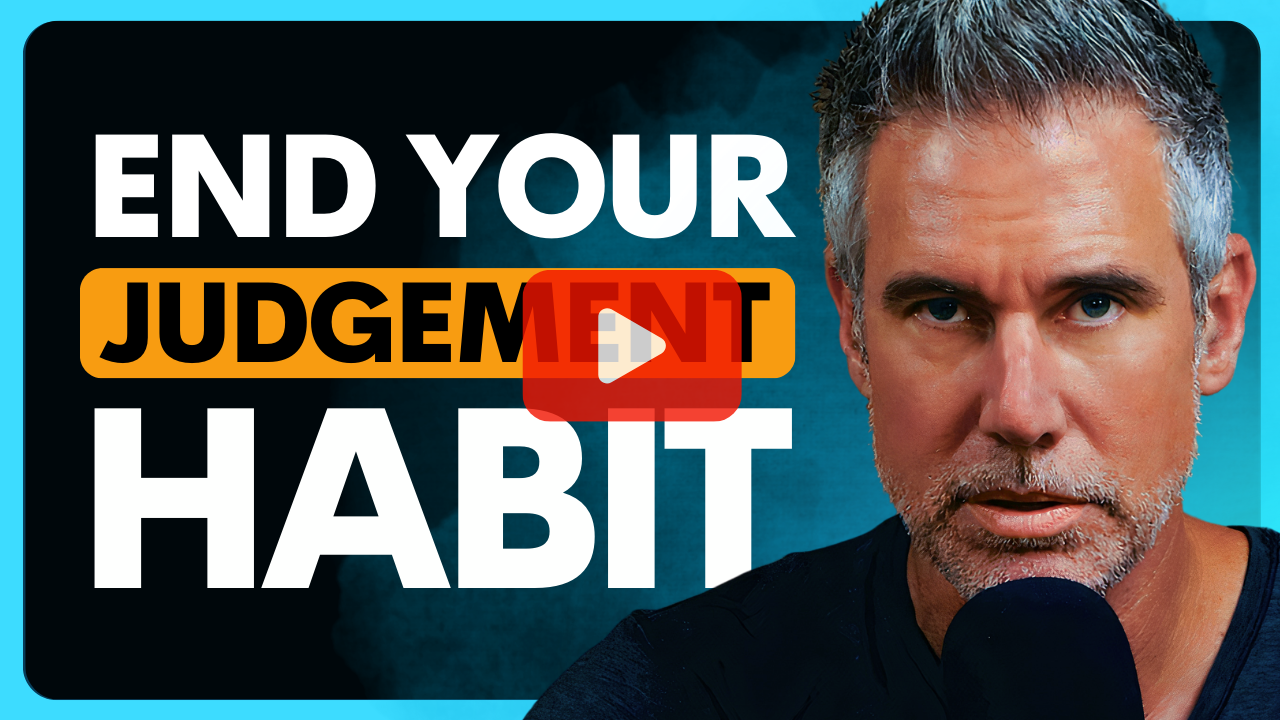
Watch This Episode On YouTube


I enjoy listening to your podcast, this episode made no sense to me. Accept that what happens is supposed to happen? Then what?